
Not A Subscriber?
Join a global group of ambitious readers on their quest to understand themselves, life, and business
The new ground rules for winning in the future
The last decade was about adopting technology and doing things better.
The next one is about transforming everything and doing things differently.
Customer expectations rise every month. Technology compounds. AI eats entire value chains.
You can't win with an outdated mentality or operating model.
And this isn't just about "companies." It's about you.
Whether you run a global business, a department, or a one-person operation, you're playing the same game.
The rules of value creation are shifting. Fast.
Here are the 10 shifts that will define who wins and who fades.
1. From generic to personalised
People are done being treated like "one of many."
Your customers expect experiences that feel made for them. Netflix curates your homepage. Spotify builds your playlists. Even supermarkets tailor offers based on your purchase history.
The same applies if your customer is internal.
If you're in finance, for example, this means that you should stop blasting a standard monthly deck to 200 people.
Create different dashboards that answer the specific questions that key roles have.
Give the sales director a clean view of revenue and risk.
Give operations real-time metrics and early warning signals.
Give the CEO a simple view of the financial runway and the impact of strategic options.
The world is moving to a segment of one where everything is personalised.
2. From surface needs to higher-order needs
People don't buy products anymore. They buy identity.
Nike doesn't sell shoes. They sell what you become when you lace them up.
Apple doesn't sell phones. They sell belonging to the creative class.
Calm doesn't sell meditation. They sell the person you become when you're not drowning in anxiety.
You do the same in your context. Ask: Who does my customer become by working with me?
Sell a car. Or help someone express who they are and which tribe they belong to.
Run a training workshop. Or reshape how people see themselves and what they believe they're capable of.
As we get richer, we focus on meeting higher-order needs.
Are your products or services moving up Maslow’s hierarchy of needs?
3. From batch to single
The old world moved in bulk. Big campaigns. Quarterly reporting. Massive production runs.
The new world is single and on-demand. Decide now. Deliver now. Adjust continuously.
The clothing brand Shein doesn't produce seasonal collections and hope they sell. They test hundreds of micro-designs, see what moves, then scale the winners in real-time.
Companies that work in batches launch too late. By the time they're ready, the market has moved.
What this means for you: stop hoarding work and dumping it in one giant update. Ship smaller pieces more often. Spot issues faster. Course-correct earlier.
Learning speed is the new competitive advantage. Planning perfection is not.
4. From owning to accessing
People care less about owning things and more about accessing value when they need it.
Everything-as-a-service.
Cars as subscriptions. Software as a license. Tools you rent when you need them. Learning as memberships, not one-off courses.
Ask: How easy is it for my customer, internal or external, to access the value I create?
5. From push to pull
The world of Mad Men advertising is dead.
Nobody wants more email blasts, more irrelevant notifications, more corporate spam.
The winners build pull. People seek them out and come back willingly.
If you constantly need to chase your customer, something's off in your value.
6. From fixed pricing to dynamic pricing
The old model: one price for everyone, fixed for long stretches, disconnected from actual demand.
The new model: pricing reacts to supply and demand, changes in real-time, reflects actual context.
Airlines and Uber have been doing this for years. But the logic is spreading everywhere.
Figma charges based on usage. Creators run limited-time drops. Manufacturers adjust prices based on input costs and capacity.
You don't need to copy their exact model. But you do need to ask: Does my pricing still reflect current reality, or just my past?
If your pricing is the same as it was three years ago, you're leaving money on the table or overcharging for low value.
7. From opaque to transparent
You live in a ratings world.
Restaurants rise and fall based on reviews. People want to know your environmental impact. Employees share what it's like to work for you. Customers compare prices, features, and stories instantly.
Perplexity shows you its sources. Tesla shares production numbers. Buffer publishes salaries.
Opacity used to look like professionalism. Now it looks like fear or control.
If you show your work, people can engage with it, build on it, improve it.
What are you hiding? And why?
8. From intermediary to direct
The internet cuts out layers. Value moves closer to the edges.
Brands sell directly. Artists reach fans without labels. SaaS bypasses traditional distributors.
For manufacturers: build direct relationships with brands or end customers. Offer made-to-order lines instead of only producing for wholesalers.
Inside organisations: remove unnecessary steps between those who have information and those who need it. Let people access tools and data directly instead of going through three layers of approval.
The more you sit in the middle doing low-value coordination, the more exposed you are.
If your job is just passing information from A to B, AI will do it faster.
9. From complex to frictionless
Every extra step loses customers.
Every form field. Every approval layer. Every "create an account to continue."
The old model: make the customer work for access. Fill out forms. Wait for approval. Go through multiple steps.
The new model: remove every possible barrier between desire and delivery.
Amazon has 1-Click ordering. Stripe offers embedded payments (buy without leaving the page). Voice AI assistants handle tasks in a second.
Inside companies, the same logic applies. If your internal customers have to fill out a request form, wait three days, then attend a meeting just to get a simple report, you're creating friction, not value.
Ask: How many steps stand between my customer and the value I provide? Then cut 80% of them.
Friction is the silent killer. Every extra step is a chance for them to change their mind, get distracted, or find someone faster.
Make it so easy they don't even notice they said yes.
10. From one-off transactions to continuous connection
The real asset is no longer the sale. It's the relationship.
Subscriptions. Memberships. Communities. Always-on communication loops.
Hotels that win don’t just host you once. They remember your preferences, reach out before you arrive, share local recommendations, and make your next stay feel inevitable.
They turn guests into loyal regulars.
You can do this inside a company too. Don't only show up at budget time. Build ongoing dialogue with your internal customers. Check in. Ask what's useful. Refine as you go.
When you build continuous connection, your value compounds.
One-off transactions are replaceable. Relationships aren't.
Treat your customers like humans, understand their pain points, and offer services and products that meet them where they are, when they want.
It’s that simple.
Everyone has a customer
You may not think of yourself as "customer facing."
But you are.
HR serves employees and leaders. Finance serves business owners and the CEO. IT serves everyone who needs tools. Operations serves whoever depends on output.
You get paid to make someone else's life easier, faster, smoother, or smarter.
These 10 shifts aren't abstract strategy themes. They apply directly to you.
Don't try to apply all 10 at once. Start with the one that makes you most uncomfortable.
Ask yourself:
1. Who is my customer (internal or external)?
2. How does this shift change what they expect from me?
3. What's one experiment I can run this week?
That's where your next level of value creation lies.
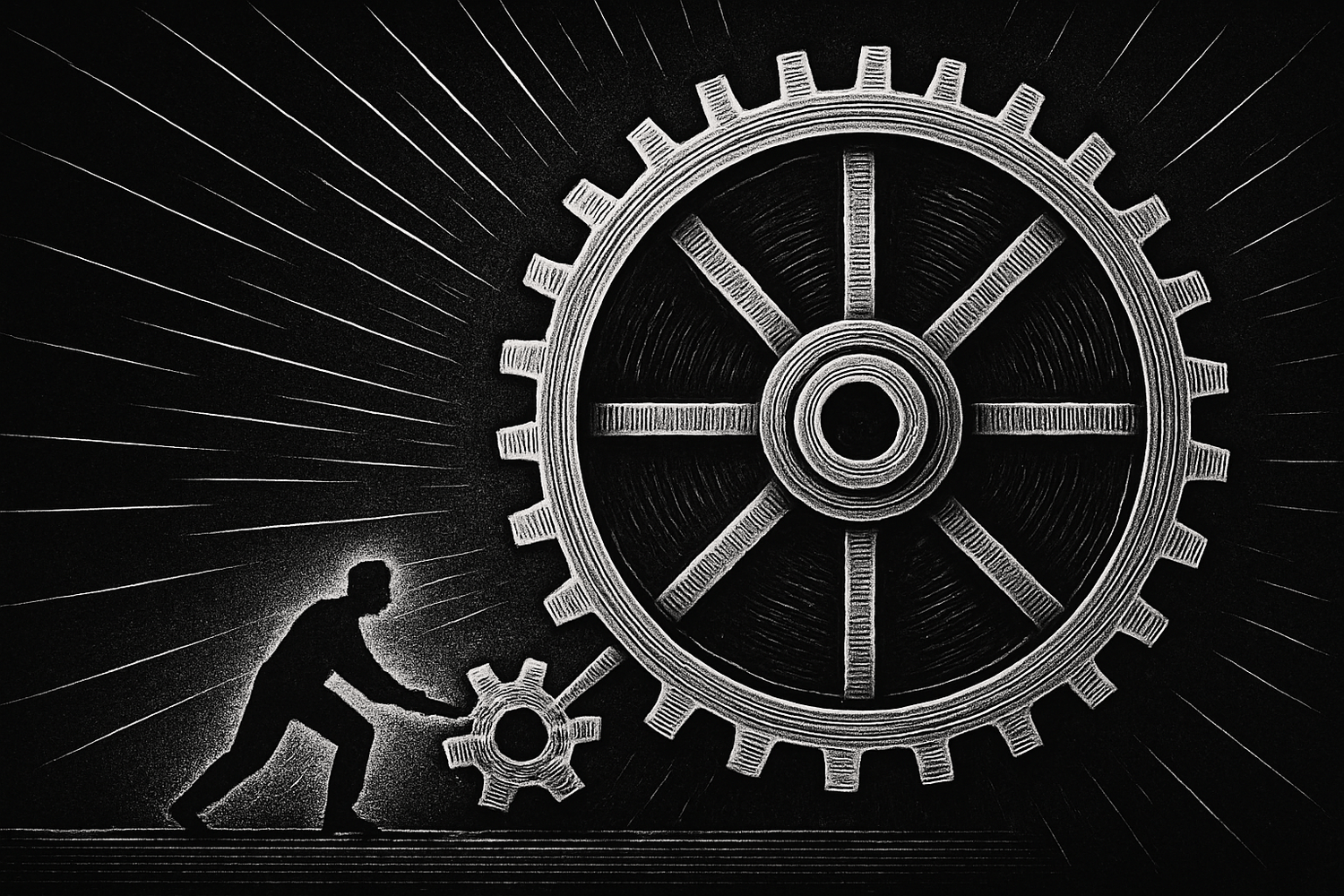
The real edge: using tech to 10x your delivery model
Most people add AI as a feature. That's tweaking.
Winners use it to completely rewire their delivery model.
For example, if you run a medical practice, use AI to triage patient inquiries and schedule appointments automatically. Analyse patient data to predict health risks before symptoms appear. Free up doctors to spend time on complex cases, not admin work.
If you run marketing, automate content production and A/B testing at scale. Use AI to identify which campaigns will work before you spend the budget. Shift your team from execution to strategy and creative direction.
If you run customer support, let AI handle 80% of common questions instantly. Use it to detect patterns in complaints before they become crises. Shift your team from answering tickets to improving the product.
If you're in real estate, start collecting better data so you can use AI to match buyers with properties based on behaviour and preferences, not just filters. Automate property valuations and market analysis. Free agents to focus on negotiation and relationship-building, not paperwork.
I could go on.
But the essence is to ask yourself these 2 questions:
"If we had to deliver this 10x faster and 10x cheaper, what would we build?"
"If a startup with no legacy came into our market today, how would they design this from scratch?"
You don't have to become a coder.
But you do have to become someone who can see what tech makes possible, ask bigger questions, design braver experiments, and actually implement them.
Most won't. They'll add a chatbot and call it innovation.
Be bolder.
The new ground rules
The businesses that win in the future will be the ones that:
Use tech to reinvent their business models rather than innovate incrementally at the edges
Think 10x not 10%
See every role as part of a value chain that leads to a real human being
Learn faster than their environment changes
The future won't be owned by the people with the best plan on paper.
Or those who read an article and then go do nothing.
It will be owned by the people who adapt in practice.
Use these 10 shifts as a lens.
Audit your world.
Then make changes.
Pick one shift this week.
Run one experiment.
See what works and what you learn.
And keep going from there.

About the author Nicolai Nielsen
I am the bestselling author of 3 books, former McKinsey Academy Associate Partner, and the founder of Potential Academy.
My mission is to raise global consciousness through education and inspiration.


© Nicolai Nielsen 2025